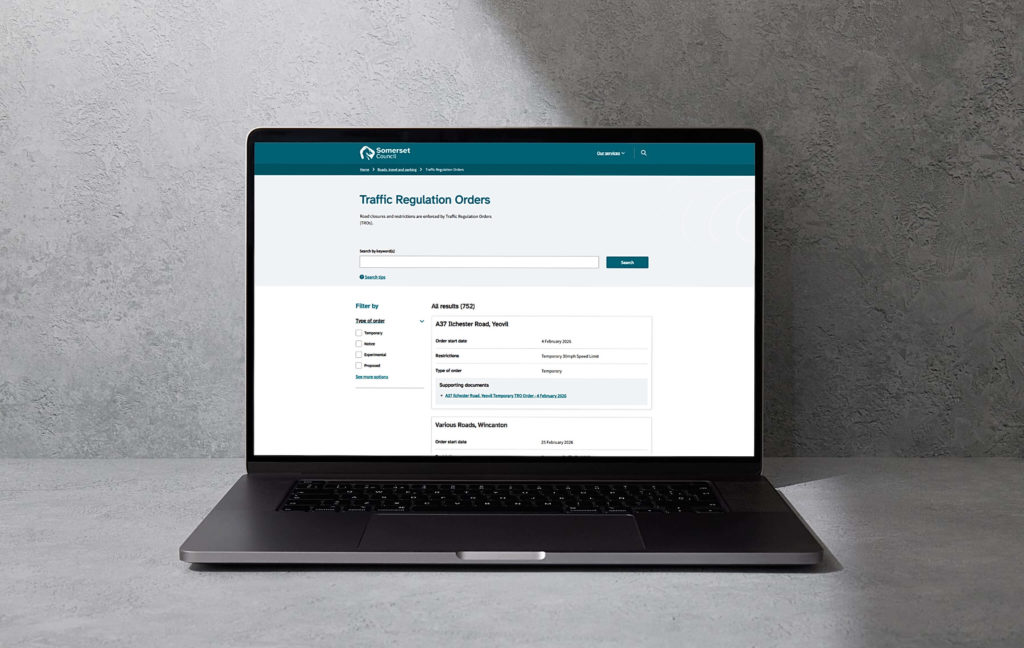

Over the past year, our development work has centred on one clear focus: making work easier – for services, for the Digital Transformation team, and ultimately for residents. By rethinking how information flows between services and our content management systems, and by introducing intelligent automation, we have reduced manual effort, removed common blockers, and enabled services to take genuine ownership of the data they manage.
A shift towards service‑led, self‑service update processes for website information
A significant step forward has been the move away from centrally managed updates and towards service‑owned workflows. Rather than sending information to the Digital team and waiting for it to be processed, services now manage their own updates through structured, consistent pathways designed for accuracy and ease of use. By adopting this targeted approach, we have optimised the quality assurance process and publishing of information on the website. We hope this will reduce the likelihood of errors.
Behind the scenes, automated workflows now carry out tasks that previously required manual intervention – creating storage, managing documents, validating content, and ensuring information is published in a consistent, accessible format. This now runs as a fully automated end‑to‑end process.
This shift has resulted in:
- no queues of small day‑to‑day requests
- no manual copying, uploading or file handling
- no risk of inconsistent or outdated information
- faster turnaround times and improved confidence for services
Real examples
The following five areas benefit from this approach:
- Traffic regulation orders
- Licensing applications
- Events – Special educational needs and/or disabilities (SEND) and Libraries
- Notices to mariners
- Substantial roadworks (Section 58)
More services are already scheduled to adopt this model, expanding a growing library of reusable digital patterns across the organisation.
Creating structured and reusable patterns
Our approach is based on a set of repeatable digital patterns that any service can adopt. These combine:
- structured data capture
- automated publishing (including scheduling)
- application-driven logic that uses Microsoft graph to access and update SharePoint data
- background workflows and validation
Once something’s used successfully in one team, it can become a blueprint for other services.
Transforming everyday work
Our progress has not come from large‑scale system replacements, but from improving the small, everyday tasks that often go unnoticed yet impact the whole organisation. Automating these activities removes friction, reduces cognitive load, and allows teams to focus on high priority workloads.
Our progress so far shows that:
- automation does not need to be large‑scale to have meaningful impact
- small efficiencies quickly add up to significant time savings
- self‑service processes lead to better, faster and more consistent outcomes
- reducing day‑to‑day workload releases capacity for genuine transformation
What this means for local government
This is what public‑sector transformation looks like in practice – not through large or disruptive system changes, but through thoughtful, incremental redesign of how work flows. By placing automation and self‑service at the centre of our processes, we are building an organisation that is more efficient, more consistent, and better equipped to meet the needs of residents.
This approach reflects Somerset’s commitment to working smarter, improving continuously, and empowering teams to deliver high‑quality, reliable services that make a real difference to our communities.