

Supporting residents to get things done
In 2025, people used the Somerset Council website to get things done. The website supported around 5.3 million visits and 14.7 million views, with an average duration spend was around 4 minutes, helping residents, businesses and professionals complete everyday tasks quickly and independently.
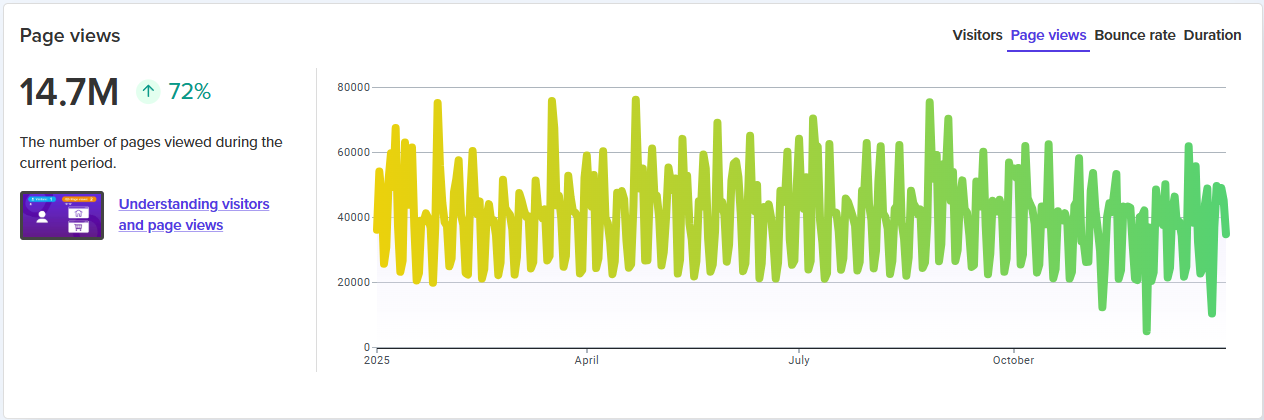
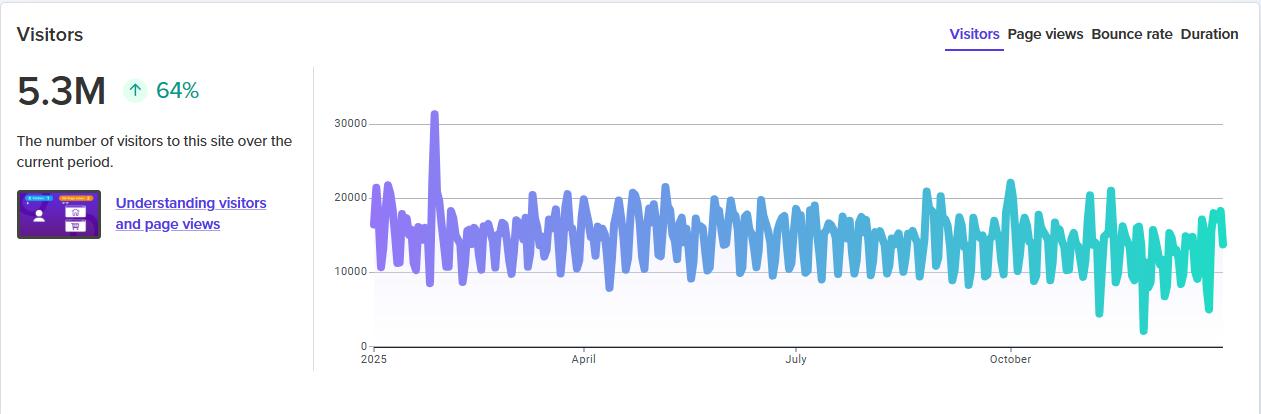
You can view a heatmap of the home page on Silktide.
People mostly come to Somerset.gov.uk to complete services
A small number of services account for a large proportion of all visits.
Throughout 2025, the most used areas of the site were:
- bins, recycling and waste
- planning
- council tax
- roads, travel and parking
- schools and education
- jobs and careers
No surprises there; these services accounted for a significant proportion of all visits and were the most common landing pages. They were also frequent exit points
This tells us something important: most people do not browse the website.
They arrive, complete a task, and leave. In many cases, leaving the site means the page has done its job.
Lower‑use content and optimisation
Some content received relatively low traffic, including:
- policy and strategy pages
- corporate and governance information
- historic consultations and campaigns
- specialist guidance for professionals
Low usage in these areas is expected and appropriate, as this content supports transparency, statutory duties and specialist audiences rather than everyday tasks.
However, data also highlights a small amount of genuine “dead weight”, primarily:
- duplicate or near‑duplicate pages
- legacy district or transitional content
- one‑off pages with no ongoing purpose
These areas present opportunities for consolidation and simplification without impacting core services or legal obligations.
How people access the website
Devices
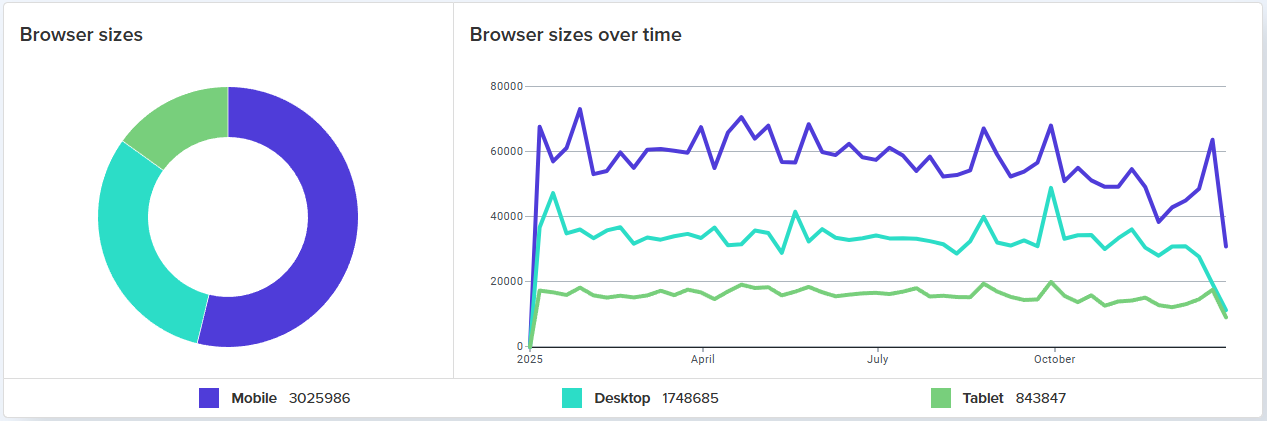
- Mobile phones were the most common way people accessed the site
- Desktop use remains significant, particularly for longer or more complex tasks
- Tablet use was low
This reinforces the importance of a mobile‑first approach to digital design and content. Content, tables, maps and forms need to work exceptionally well at small widths, which is why we try to avoid using them if there is a better alternative.
Traffic sources
- Search engines remain the primary way people find the site
- Direct visits (such as bookmarks, repeat users) are also high
- Social media accounted for approximately 132,000 visits, around 2.3% of total traffic
- People generally search for a task or problem rather than navigating from the homepage.
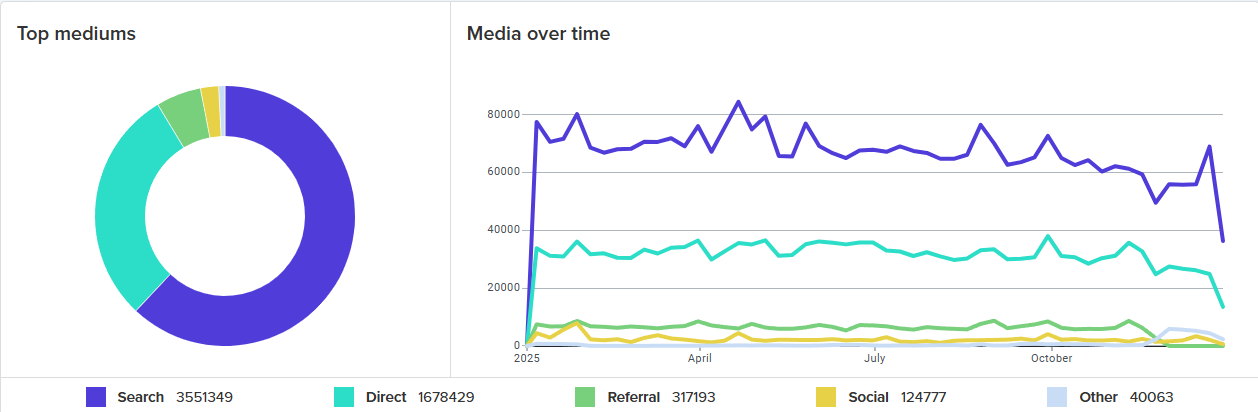
Users don’t “go to” Somerset.gov.uk – they Google a problem.
Examples:
- “bin day Somerset”
- “comment on planning application Somerset”
- “Somerset council tax pay”
Page titles, headings and plain‑English language matter hugely.
Outgoing links: where people really go
Top outbound destinations are extremely consistent:
- e‑Paycapita (payments, council tax)
- Planning portals (South Somerset, Mendip, Sedgemoor)
- Achieve forms
- Homefinder Somerset
- LibrariesWest
- GOV.UK services (Blue Badge, Register to vote)
Key insight: Somerset.gov.uk is functioning as a trusted front door to many separate systems
Which reinforces the importance of:
- clear expectations (“You’ll be taken to another site”)
- accessibility continuity
- consistent language before handoff
Emerging trends: AI and digital discovery
In 2025, AI tools such as ChatGPT, Microsoft Copilot, Perplexity and Google Gemini accounted for approximately:
- 8,700 visits,
- or 0.15% of total website traffic
While this is currently a small proportion, it represents a new and emerging discovery channel.
AI‑referred visits most commonly landed on:
- bins and recycling pages
- council tax information
- planning services
These are the same high‑demand services accessed via search engines, suggesting AI is acting as an additional discovery layer, rather than changing the nature of demand.
It is also likely that AI’s influence is underrepresented in analytics. Because AI often answers questions without a click, and when users do click, current analytics tools don’t always identify AI as the source. We can see AI traffic starting to appear, but the true influence of AI on how people find our services is almost certainly higher than the numbers show
Accessibility
The council continues to prioritise digital accessibility.
The website’s most‑used services are likely broadly accessible, supported by:
- clear page structures
- plain English content
- mobile‑friendly layouts
- ongoing testing and quality assurance processes
However, accessibility is treated as an ongoing improvement activity, with risk most likely to sit in older documents, third‑party tools and legacy content rather than core services. We aim to meet WCAG 2.2 AA and regularly test our site, but accessibility is an ongoing process rather than a one‑off state
What this tells us
Looking at how people used the Somerset Council website in 2025 shows that:
- people come with a clear purpose
- most journeys are short and task‑focused
- high exit rates often mean success, not failure
- mobile use dominates
- search is the main way people arrive
- the website plays a key role as a guide between services
This reinforces the importance of:
- prioritising high‑demand services
- keeping content clear and scannable
- designing mobile‑first
- and making service hand‑offs simple and reassuring
Somerset.gov.uk helped people get things done quickly and clearly. But we are not naive; the site is not perfect, and never will be. We must stay up to date with the latest tech and continue to grow and improve, so every visitor can continue to get things done.
Focus for the year ahead
Based on 2025 performance data, digital priorities for the coming year are:
- Protect and improve core services, particularly bins, council tax and planning
- Reduce content sprawl by reviewing and consolidating low‑use legacy content
- Monitor emerging AI trends proportionately, without over‑engineering solutions
- Strengthen accessibility where risk is highest, particularly in older content and documents
Business illustrations by Storyset
Data is sourced from Silktide, cookieless tracking.